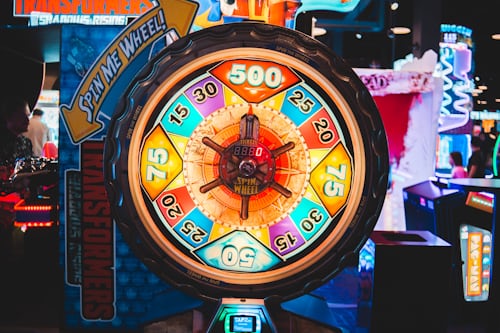
Strategic gameplay and plinko odds reveal surprising prize multipliers
- Strategic gameplay and plinko odds reveal surprising prize multipliers
- Understanding the Physics of the Descent
- The Role of Peg Density and Angle
- Calculating Probabilities and Expected Value
- The Impact of Prize Distribution
- Strategies to Maximize Your Chances (and Manage Risk)
- Bankroll Management and Limiting Exposure
- The Psychology of Plinko: Why It's So Addictive
- Beyond the Game Show: Plinko's Adaptations and Future
Strategic gameplay and plinko odds reveal surprising prize multipliers
The game of chance known as plinko has captivated audiences for decades, largely due to its prominent role in popular television game shows. However, beyond the bright lights and enthusiastic hosts, lies a fascinating interplay of probability, strategy, and a touch of luck. Unlike games reliant solely on skill or pure randomness, plinko presents a unique scenario where understanding the underlying mechanics can subtly influence your chances of securing a higher payout. This isn’t about predicting the exact path of the disc, but rather about appreciating the distribution of prizes and making informed choices, even within a seemingly unpredictable system. The core appeal is simple: drop a disc from the top, watch it bounce, and hope it lands in a valuable slot.
The allure of plinko also stems from its visual nature. The cascading descent of the disc, the clattering sound as it interacts with the pegs, and the anticipation of where it will finally settle create an engaging and almost hypnotic experience. It’s a game that’s easy to understand, making it accessible to all ages and knowledge levels. While a significant element of random chance always prevails, this does not diminish the mental exercise some players undertake to assess risks and potential rewards. The visual element, coupled with the simplicity of the game, has led to its adaptation in various forms, from physical arcade games to digital simulations, extending its reach and enduring popularity.
Understanding the Physics of the Descent
The path a plinko disc takes isn't entirely random, but is governed by the principles of physics, specifically gravity and the angles of impact with the pegs. Each peg acts as an obstacle, diverting the disc either to the left or to the right. The distribution of pegs is usually symmetrical, yet even slight variations in their placement can influence the overall odds of landing in a particular slot. The initial drop point also plays a crucial role. A more central release tends to result in a more erratic path, while a drop closer to one side can create a bias toward that side of the board, though the complexity of multiple deflections mitigates precise prediction. Factors like the material of the disc and the pegs also contribute – a heavier disc might exhibit different behavior compared to a lighter one, similarly a more rigid peg will provide a more defined bounce.
The Role of Peg Density and Angle
Peg density – the number of pegs per row – significantly influences the predictability of the descent. A higher density creates more opportunities for deflection, resulting in a more randomized trajectory. Conversely, lower density allows for more direct paths. The angle at which the pegs are set also impacts the outcome. A steeper angle increases the likelihood of a sharper deflection, while a shallower angle results in a more gradual change in direction. Understanding these nuances, even intuitively, can help players appreciate why some slots are statistically more likely to be hit than others. The geometrical arrangement of these elements is the cornerstone of the game’s captivating randomness.
| Peg Density | Trajectory Predictability | Potential Payout Variability |
|---|---|---|
| High | Low | High |
| Medium | Moderate | Moderate |
| Low | High | Low |
Analyzing these factors provides a foundational understanding of how the game functions beyond simply dropping a disc and hoping for the best. It’s a system built on subtle influences that contribute to the overall outcome.
Calculating Probabilities and Expected Value
While predicting the exact landing spot is impossible, calculating probabilities and expected value can provide insights into the potential return on investment. Each slot at the bottom of the plinko board represents a different prize value, and the probability of landing in each slot is determined by the number of possible paths leading to it. A slot in the center, reachable through a wider range of paths, will have a higher probability than a slot on the extreme edges. Expected value is calculated by multiplying the value of each prize by its probability and summing the results. This provides a mathematical estimate of the average payout per game. However, it's important to remember that expected value is a long-term average and does not guarantee a specific outcome in any single game. It serves as a guide to assess the overall fairness or profitability of the game in the long run.
The Impact of Prize Distribution
The distribution of prizes significantly influences the expected value of the game. A board with a few extremely high-value prizes and many small-value prizes will have a higher variance – meaning the outcomes are more spread out. This can be appealing to risk-takers hoping for a significant win, but it also means a higher probability of losing a small amount. Conversely, a board with a more even distribution of prizes will have lower variance, providing more consistent, though potentially smaller, payouts. Players often gravitate toward boards with a few exceptionally high prizes, despite the lower probability of winning them, simply due to the excitement of the potential jackpot. This emotional draw often overrides rational calculation of expected value.
- Higher-value prizes create excitement and attract players.
- Uneven prize distribution increases game variance.
- Expected value helps assess long-term profitability.
- Consistent, smaller prizes offer lower risk.
Understanding the interplay between probabilities, prize distribution, and expected value empowers players to make more informed decisions when playing plinko.
Strategies to Maximize Your Chances (and Manage Risk)
While plinko is fundamentally a game of chance, certain strategies can help maximize your chances of winning, or at least, minimize your risk. Choosing a starting position is a subtle strategic element. As mentioned earlier, dropping the disc closer to a desired side might slightly bias the outcome. However, this effect is relatively small and should not be relied upon heavily. Another strategy involves observing the board for patterns, if possible – are certain areas consistently receiving more traffic than others? This could indicate a subtle bias in the peg arrangement. Perhaps the most important strategy is bankroll management. Setting a budget and sticking to it, regardless of wins or losses, is crucial to avoid excessive losses. Treating plinko as entertainment rather than a guaranteed income source is a sensible approach.
Bankroll Management and Limiting Exposure
Effective bankroll management is paramount in any game of chance, and plinko is no exception. Before starting, determine a maximum amount you’re willing to lose without impacting your financial well-being. Divide this amount into smaller units, representing individual games or rounds. Never chase losses by increasing your bets in an attempt to quickly recoup your funds. This can quickly lead to escalating losses and exceed your initial budget. Setting a win limit is also beneficial. Once you reach a certain profit level, consider stopping and cashing out, rather than risking it all in hopes of a larger win. Disciplined bankroll management is essential for responsible gaming and preserving your funds.
- Set a strict budget before playing.
- Divide your budget into smaller betting units.
- Avoid chasing losses by increasing bets.
- Establish a win limit and cash out when reached.
By employing these strategies, you can enhance your enjoyment of plinko while managing your risk and potentially increasing your chances of securing a favorable payout.
The Psychology of Plinko: Why It's So Addictive
The addictive nature of plinko isn't solely attributable to the potential for financial gain. Several psychological factors contribute to its enduring appeal. The visual spectacle of the disc cascading down the pegs and the unpredictable nature of its descent trigger a dopamine release in the brain, creating a sense of excitement and anticipation. This is similar to the reward system associated with other forms of gambling. The near misses – when the disc nearly lands in a high-value slot – also contribute to the addictive cycle. These close calls provide a false sense of control and encourage players to continue playing, believing their luck will eventually change. The simplicity of the game makes it easy to engage with, while the element of chance offers a constant hope for a big win. The combination of these elements creates a compelling and potentially addictive experience.
Beyond the Game Show: Plinko's Adaptations and Future
The enduring popularity of plinko has led to numerous adaptations and innovations beyond its original game show format. Digital versions of the game, readily available on online casinos and mobile apps, offer convenient access and often incorporate bonus features and themed designs. Physical plinko boards have become popular attractions at arcades, bars, and even private events. Developers are exploring new ways to incorporate plinko mechanics into other game genres, creating novel experiences that blend chance and strategy. The potential for virtual reality (VR) and augmented reality (AR) applications could further enhance the immersive experience, allowing players to interact with the plinko board in a more realistic and engaging manner. The continuous evolution of technology ensures that plinko will likely remain a popular form of entertainment for years to come, adapting to new platforms and engaging new audiences.
Looking forward, the integration of plinko with blockchain technology presents exciting possibilities. Provably fair plinko games, built on decentralized networks, could address concerns about fairness and transparency, providing players with verifiable assurance that the outcomes are truly random. This could revolutionize the online gambling industry and attract a new wave of players seeking trust and integrity. The future of plinko is not just about maintaining its current appeal, but about leveraging technological advancements to create more secure, engaging, and innovative gaming experiences.